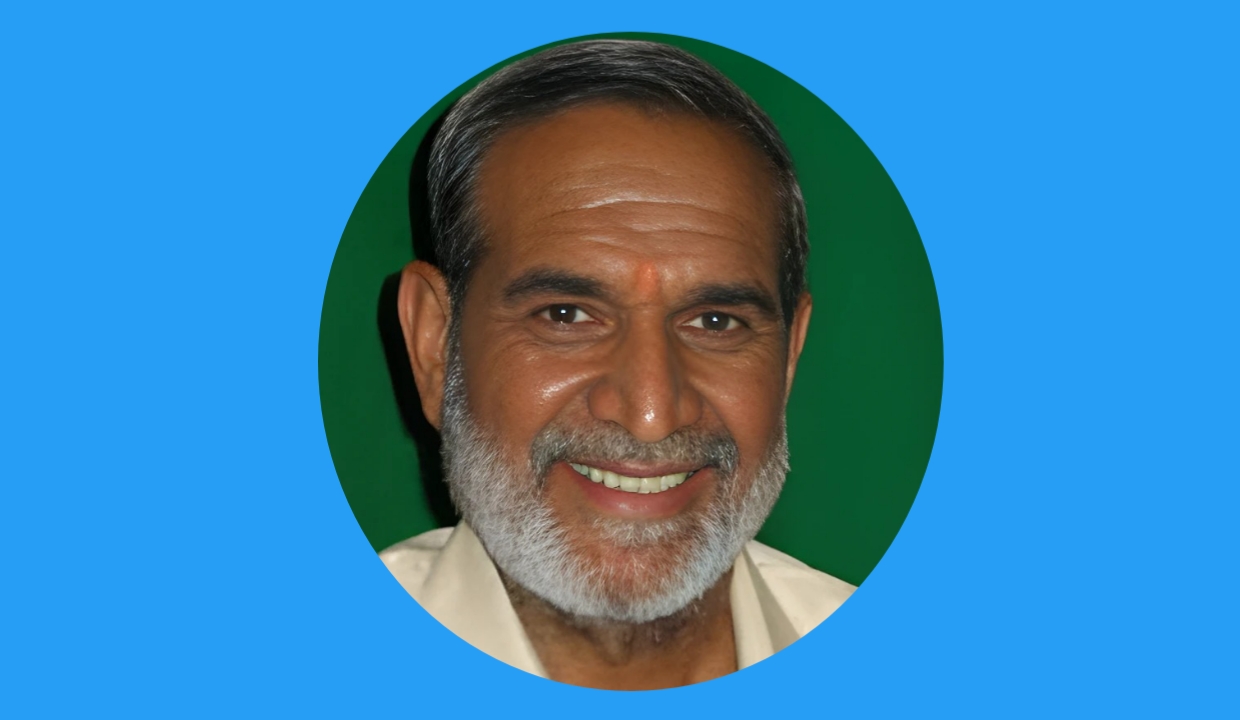
Sajjan Kumar Biography, he was born on September 23, 1945, in Delhi, British India, could be a previous Indian lawmaker known for his affiliation with the Indian National Congress (INC) and his disputable inclusion within the 1984 anti-Sikh riots. Over the a long time, his political career has been eclipsed by lawful fights and feelings related to these awful occasions.
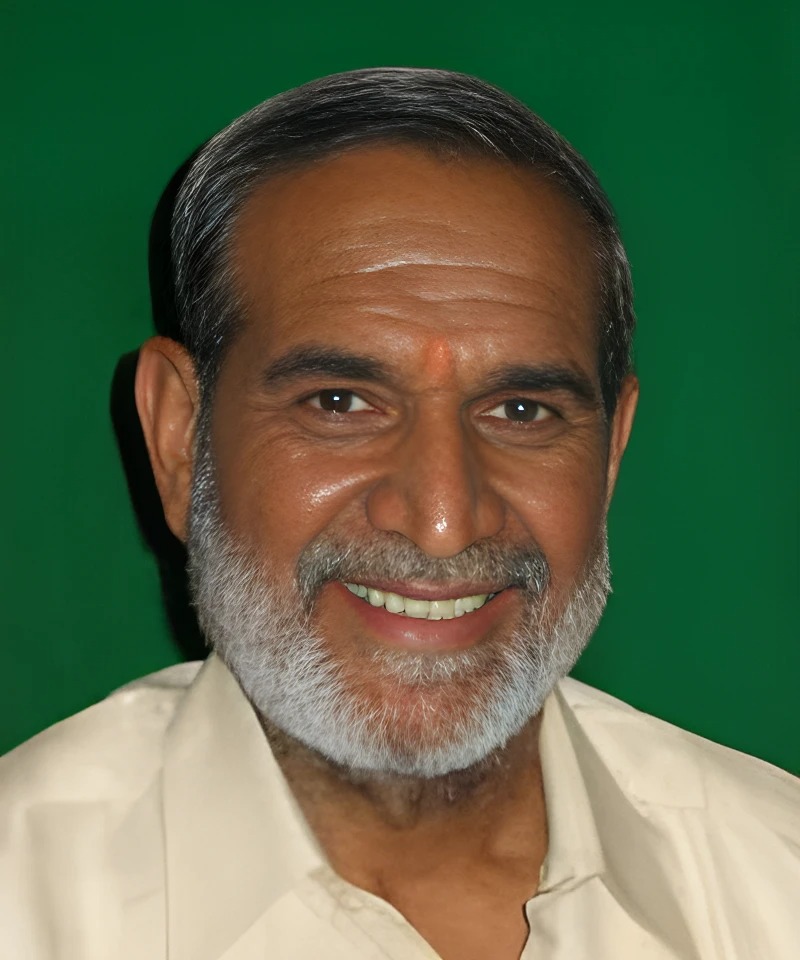
Sajjan Kumar Early Life and Political Rising
Developing up in a unassuming family in Delhi, Sajjan Kumar’s early life was checked by financial challenges. In spite of these hardships, he created a sharp intrigued in legislative issues amid the 1970s. His political travel started in 1977 when he was chosen to the Metropolitan Enterprise of Delhi from the Madipur voting demographic, a notable achievement amid a period when few Congress individuals secured seats within the capital. His commitment and grassroots association before long caught the consideration of Sanjay Gandhi, a noticeable Congress pioneer, driving to a near affiliation between the two. Kumar got to be one of Sanjay Gandhi’s trusted associates, playing a noteworthy part in actualizing the “Five Point Program” at the grassroots level.
Sajjan Kumar Biography Parliamentary Residency
Sajjan Kumar’s rising political impact was apparent when, at the age of 35, he challenged the 1980 Lok Sabha races. He accomplished a noteworthy triumph by overcoming Delhi’s first Chief Serve, Brahm Prakash, securing a situate within the 7th Lok Sabha. His residency in Parliament was checked by dynamic interest in different committees, counting the Consultative Committee for the Service of Works and Lodging. Kumar’s political travel saw assist triumphs with re-elections to the 10th Lok Sabha in 1991 and the 14th Lok Sabha in 2004. Strikingly, his 2004 triumph was noteworthy, as he won by a edge of 855,543 votes, one of the biggest in Indian discretionary history. Amid this period, he served on the Committee on Urban Advancement and the Committee on Individuals of Parliament Nearby Range Improvement Plot, contributing to arrangement discourses and improvement activities.
Association within the 1984 Anti-Sikh Riots
The death of Prime Serve Indira Gandhi on October 31, 1984, driven to broad anti-Sikh riots over Delhi and other parts of India. Sajjan Kumar’s title risen noticeably among those charged of affecting savagery amid this period. Observers and survivors charged that Kumar played a significant part in coordinating assaults against the Sikh community, especially in ranges like Sultanpuri and Mangolpuri. Reports demonstrated that he not as it were prompted swarms but too given financial motivations and alcohol to the aggressors. A fact-finding group mutually organized by the People’s Union for Majority rule Rights (PUDR) and the People’s Union for Gracious Freedoms (PUCL) in 1984 concluded that the assaults were a result of think arranging by powerful lawmakers, with Kumar being habitually named by survivors. In spite of these genuine charges, introductory examinations did not lead to prompt legitimate activity against him.
Lawful Procedures and Feelings
It wasn’t until 2005, taking after suggestions from the Equity G.T. Nanavati Commission, that the Central Bureau of Examination (CBI) revived cases related to the 1984 riots, counting those against Sajjan Kumar. The CBI’s examinations uncovered a trick of noteworthy extents, proposing collaboration between Kumar and certain police authorities amid the riots. In 2010, Kumar confronted trial on different charges, counting kill, dacoity, advancing animosity between communities, and criminal scheme. Observers given declarations enumerating his association in prompting swarms and collaborating with police authorities to target Sikhs.
In April 2013, a area court cleared Kumar, driving to broad dissents and disappointment among the Sikh community and human rights activists. The CBI requested this choice, and in December 2018, the Delhi Tall Court upset the quittance, sentencing Sajjan Kumar to life detainment for his part within the riots. The court’s judgment underscored the got to guarantee casualties that equity would win, indeed in case postponed. Taking after this conviction, Kumar surrendered from the essential enrollment of the Indian National Congress.
Whereas serving his sentence, Kumar confronted extra legitimate challenges. In February 2025, he was indicted in a partitioned case related to the murders of Jaswant Singh and his child, Tarundeep Singh, amid the 1984 riots in Delhi’s Saraswati Vihar region. This conviction advance cemented his culpability within the appalling occasions of 1984.
Individual Life of Sajjan Kumar Biography
Sajjan Kumar hails from a Hindu Jat family. He is hitched to Slam Kaur, and the couple has three children:
a child, Jag Parvesh, who has moreover wandered into legislative issues, and two girls. In spite of his political noticeable quality, Kumar’s individual life has remained generally private. His brother, Ramesh Kumar, is additionally included in legislative issues, showing a family profoundly locked in in open benefit.
Bequest and Discussions
Sajjan Kumar political career, once stamped by noteworthy appointive triumphs and impact inside the Indian National Congress, has been unavoidably tarnished by his association within the 1984 anti-Sikh riots. The deferred equity and different legitimate procedures traversing decades have been a central point of talks on responsibility and human rights in India. His feelings serve as a update of the long-lasting affect of communal viciousness and the significance of maintaining equity for casualties, notwithstanding of the time slipped by.
Also Read Related Articles:
In conclusion, Sajjan Kumar Biography typifies a direction from political unmistakable quality to legitimate ruin. His story underscores the complex exchange between legislative issues, equity, and communal agreement in India’s modern history.